
Table of contents
- 01Employment contracts in Nepal
- 02Quick answer
- 031. Correct parties and authority
- 042. Employment category
- 053. Role, duties and reporting
- 064. Duration and probation
- 075. Remuneration
- 086. Hours, overtime and attendance
- 097. Leave and benefits
- 108. Policies and conduct
- 119. Confidentiality, IP and data
- 1210. Notice and termination
- 1311. Changes and governing language
- 14Signing checklist
- 15Review note
Quick answer
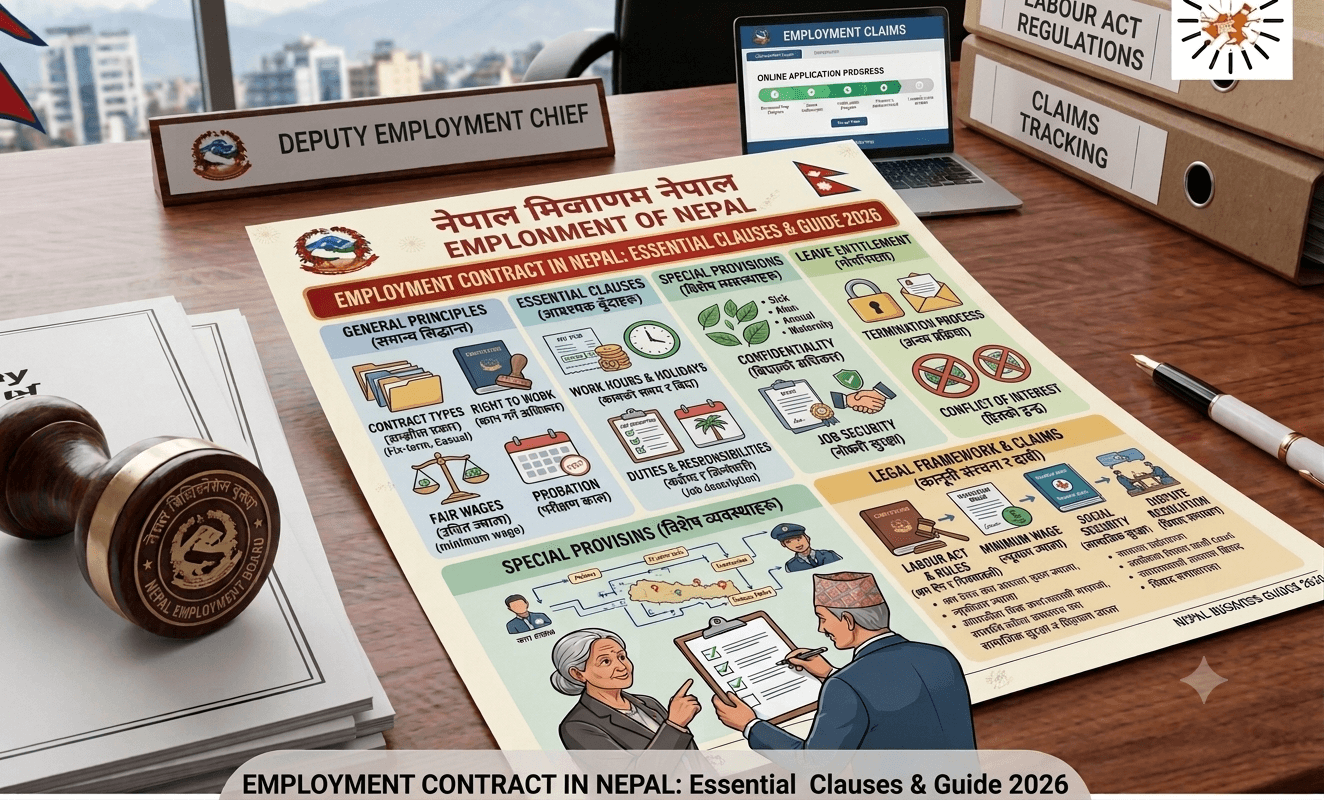
Nepal employers generally need an employment agreement before work begins. The document must reflect the real employment type and set lawful terms for work, remuneration, benefits, SSF, policies, confidentiality, changes and termination.
Key facts
- ✓Written employment agreements are generally required except for casual work.
- ✓The real nature of work can override an incorrect contract label.
- ✓Remuneration and benefits should be itemised and payroll-aligned.
- ✓Foreign at-will clauses do not remove Nepal statutory protection.
- ✓Both parties should receive the signed contract and every incorporated schedule.
Employment contracts in Nepal
Section 11 of the Labour Act, 2074 generally prohibits an employer from engaging a worker without an employment agreement. Casual employment is the principal statutory exception to the written-agreement requirement. An oral start can still create an employment relationship and legal obligations.
Quick answer
Draft the contract from the real job, not a downloaded title. Identify the correct employment category, parties, duties, workplace, start and duration, probation, hours, current remuneration, benefits, leave, social security, safety, policies, confidentiality, intellectual property, data, changes, notice and lawful termination. Give both parties a signed copy and align payroll and HR practice with it.
1. Correct parties and authority
Use the employer's exact registered name, address and legal form. Identify the authorised signatory and employee from official records. A group brand, founder or foreign parent should not sign as employer when a different Nepal entity employs and pays the worker.
State the commencement date and distinguish it from the signature date. Record prior continuous service if a new document formalises an existing relationship rather than pretending employment begins again.
2. Employment category
Choose regular, work-based, time-based, casual or part-time employment based on actual work. Regular employment covers work not genuinely limited to a specified task, period or casual engagement. Part-time employment generally means 35 hours or less per week; casual employment is seven days or less in a month.
The Labour Act and Rules permit the competent office to determine regular status by the nature of the work despite the contract wording. Repeated fixed terms should not be used simply to remove regular-worker protection.
3. Role, duties and reporting
State the job title, department, reporting line, core responsibilities, authority and location. Attach a job description where detail is likely to evolve, but keep a clear boundary around material changes.
A flexibility clause should allow reasonable related duties, not unlimited unilateral reassignment. Address travel, remote work, transfers, equipment, expense approval and client-site work where relevant.
4. Duration and probation
For time-based employment, state genuine start and end dates and what happens if the project is extended. For work-based employment, define the work and objective completion trigger.
State any lawful probation period, review criteria, feedback process and confirmation. Probation is not an “at-will” period outside Nepal law. Keep timely evidence of assessment.
5. Remuneration
Separate basic remuneration, allowances, incentive or commission, festival allowance and benefits. State payment frequency, account, review process and lawful deductions. Confirm the package meets the latest government-prescribed minimum remuneration.
Incentive clauses should define target-setting, measurement, approval, disputes, partial periods, leave, termination and payment date. Avoid absolute employer discretion after performance has been earned.
6. Hours, overtime and attendance
State the normal schedule, weekly rest, breaks, shift or flexible arrangements and attendance method. The Labour Act generally limits normal work to eight hours daily and 48 hours weekly. Overtime is limited and attracts premium remuneration.
Remote or senior status does not automatically remove statutory hours. Clarify who may authorise overtime and how it is recorded.
7. Leave and benefits
Refer accurately to applicable weekly, public, home, sick, maternity, maternity-care, mourning and substitute leave. State any superior contractual leave separately so it cannot be confused with the statutory floor.
Cover SSF or applicable provident fund/gratuity treatment, insurance, medical benefits, meals, transport, communication and retirement arrangements. Keep the wording capable of following lawful statutory changes without reducing accrued rights.
8. Policies and conduct
Incorporate identified policies by reference and provide access before acknowledgement. The contract and handbook should not contradict each other. Explain precedence between the Act, contract, certified rules, collective agreement and policies.
Address lawful instructions, conflicts, gifts, anti-bribery, harassment, safety, technology, social media and grievance processes proportionately.
9. Confidentiality, IP and data
Define confidential information, permitted use, security, disclosure exceptions and return or deletion. Identify ownership and permitted use of work product rather than relying on a vague claim to every idea an employee ever develops.
Employee information should be collected, stored and disclosed consistently with Nepal's privacy framework. Explain monitoring and cross-border access where relevant.
10. Notice and termination
Do not use foreign “at-will” wording. State that resignation, notice, disciplinary action, performance, retrenchment and termination follow mandatory Nepal law. A contract can provide a superior benefit but cannot remove statutory procedure.
Address handover, property, access, final settlement and employment certificate. Avoid clauses authorising arbitrary forfeiture of earned wages or benefits.
11. Changes and governing language
Require signed written amendments for material changes to role, remuneration, location, hours or duration. Identify the governing language if bilingual versions are used and ensure both accurately reflect the agreed terms.
Signing checklist
1. Verify entity, authority and employee identity. 2. Match the category to actual work. 3. Reconcile pay and benefits with payroll. 4. Attach the correct job description and policies. 5. Remove foreign-law concepts and contradictions. 6. Sign, date and give each party a complete copy. 7. Calendar probation, expiry, review and permit dates.
Review note
This guide was reviewed on 21 July 2026. Remuneration, social-security and procedural requirements change; verify current official notices before signing.
Common questions
Frequently asked questions
Official sources
Primary materials used for the legal review of this guide.
- 1.Nepal Law Commission - Labour Act 2074Accessed July 21, 2026
- 2.Nepal Law Commission - Labour Rules 2075Accessed July 21, 2026
- 3.Social Security Fund - Employer registration systemAccessed July 21, 2026
Professional assistance
Need professional legal assistance?
Get advocate-led guidance tailored to your matter, documents and compliance requirements.
View related legal service →Editorial and legal review
Reviewed by: Wakil Nepal Legal Team
Last reviewed: July 21, 2026
This guide provides general legal information. Procedures and official requirements can change, and case-specific advice may be necessary.